Choosing the right solar charge controller is one of the most critical decisions in building an efficient, reliable solar power system. The two dominant technologies on the market today are Pulse Width Modulation (PWM) and Maximum Power Point Tracking (MPPT). While both regulate battery charging, they differ significantly in efficiency, cost, and performance.
In this guide, Cosuper—a trusted solar charge controller manufacturer offering wholesale solar charge controller solutions—breaks down the key differences to help you make an informed decision and buy MPPT solar charge controller options that maximize your energy harvest.
What Is a Solar Charge Controller?
A solar charge controller regulates the voltage and current flowing from solar panels to batteries. Its primary role is to:
Prevent battery overcharging
Avoid excessive battery discharge
Improve charging efficiency
Extend battery lifespan
Protect the entire solar power system
Without a proper solar charge controller, battery performance can degrade significantly, reducing system reliability and increasing maintenance costs.
Modern systems mainly use two controller technologies:
PWM vs MPPT Solar Charge Controllers: Key Differences
Feature | PWM Solar Charge Controller | MPPT Solar Charge Controller |
Efficiency | 70-80% | 95-99% |
Energy Harvest Gain | Baseline | +10-30% (avg. 15-25%) |
Best System Size | Small (<200-400W) | Medium to Large (>400W) |
Panel Voltage Flexibility | Must closely match battery voltage | Accepts much higher array voltages |
Cost | Lower upfront | Higher upfront, better long-term ROI |
Temperature Performance | Good in hot conditions | Excellent across all temperatures |
Cable Requirements | Thicker cables for low voltage | Thinner cables possible due to higher voltage |
Ideal Applications | Small off-grid, basic lighting | RVs, homes, commercial, variable conditions |
The core distinction lies in how they handle power:
PWM: Pulls the panel voltage down to near battery voltage, wasting potential power when panel voltage is significantly higher.
MPPT: Dynamically adjusts to the panel’s optimal voltage and current, delivering more usable power to the battery.
MPPT controllers typically harvest 10-30% more energy than PWM models, depending on climate and system design. In cold conditions or with high-voltage arrays, the advantage can exceed 30%.
How MPPT Technology Improves Solar Efficiency
One of the biggest advantages of MPPT technology is dynamic maximum power tracking.
For example:
A PWM controller simply reduces the panel voltage to battery voltage, wasting potential power.
An MPPT controller converts excess voltage into additional current, significantly improving energy utilization.
Example Calculation
PWM Example
MPPT Example
This can improve charging efficiency by 20%–30% depending on weather and battery conditions.
When to Choose PWM vs MPPT
Choose PWM If:
Your system is under 200W
You're in a hot climate (less MPPT boost)
Budget is tight and efficiency gains aren't critical
Using older 12V-compatible panels
Choose MPPT If:
Your system is 200W or larger
You're in a cold or variable climate
You want maximum energy harvest
Using high-voltage panels or long wire runs
You plan to buy MPPT solar charge controller units for scalability
Why Choose Cosuper Solar Charge Controllers?
As an experienced solar charge controller manufacturer, Cosuper provides reliable and high-efficiency solar power management solutions for global customers.
Cosuper offers:
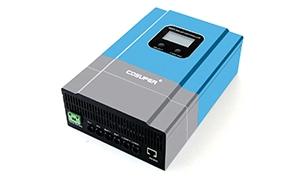
Advanced MPPT solar charge controllers
Durable PWM controller solutions
OEM & ODM manufacturing
Wholesale supply support
Strict quality control
International certifications
Technical engineering support
Our controllers are widely used in:
Residential solar systems
Telecom infrastructure
RV and marine applications
Industrial backup systems
Off-grid energy projects
If you're looking to buy mppt solar charge controller products for commercial or distribution projects, COSUPERPOWER provides scalable manufacturing and global delivery support.
Conclusion
Choosing between PWM vs MPPT solar charge controllers comes down to your system size, climate, and performance goals. PWM is affordable and suitable for small, simple setups. MPPT delivers superior efficiency, especially in cold climates and larger systems, making it the preferred choice for serious solar installations.
As a trusted solar charge controller manufacturer, Cosuper provides high-quality PWM and MPPT controllers for every application. Whether you're looking to buy MPPT solar charge controller units or need wholesale solar charge controller solutions, our team is ready to help you optimize your solar power system.
 English